
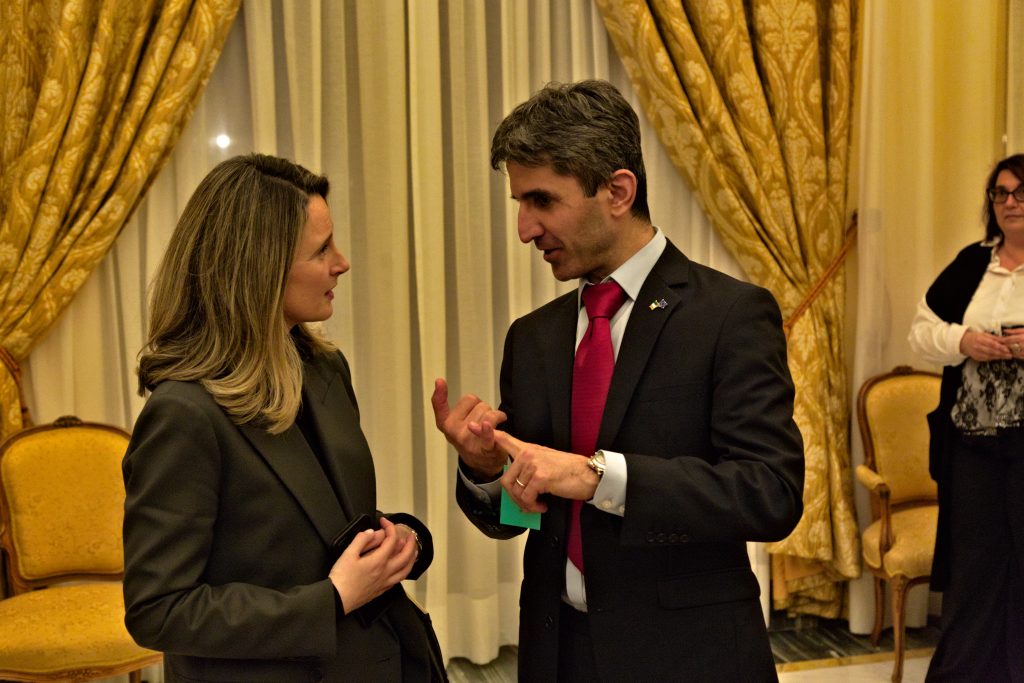
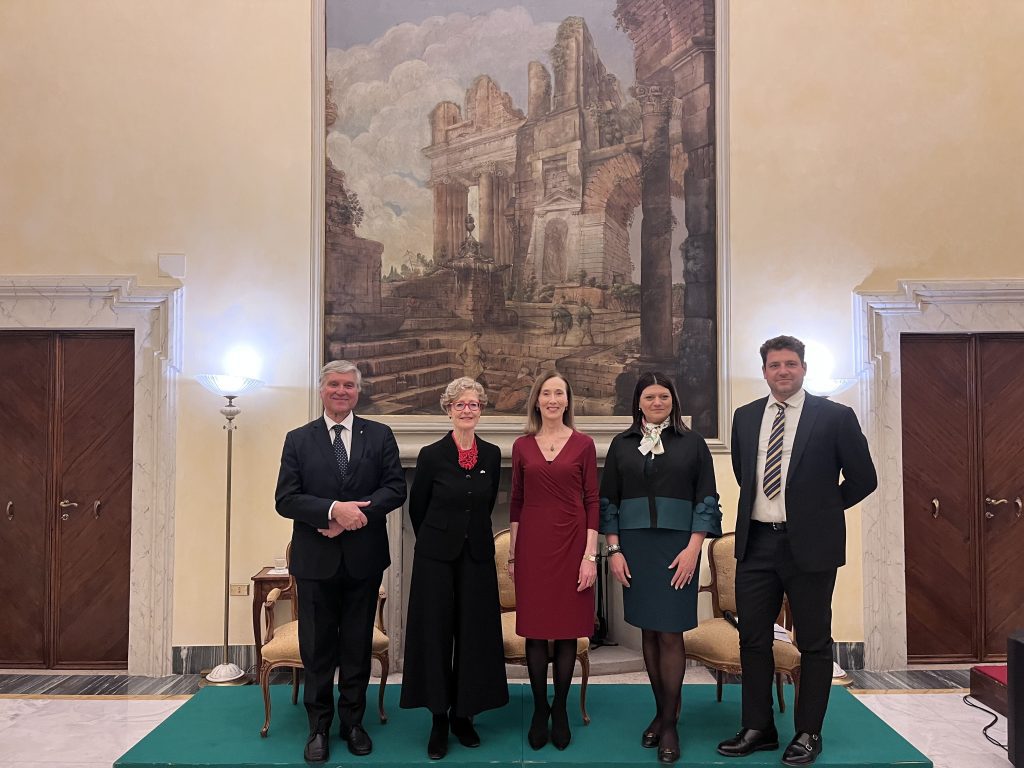
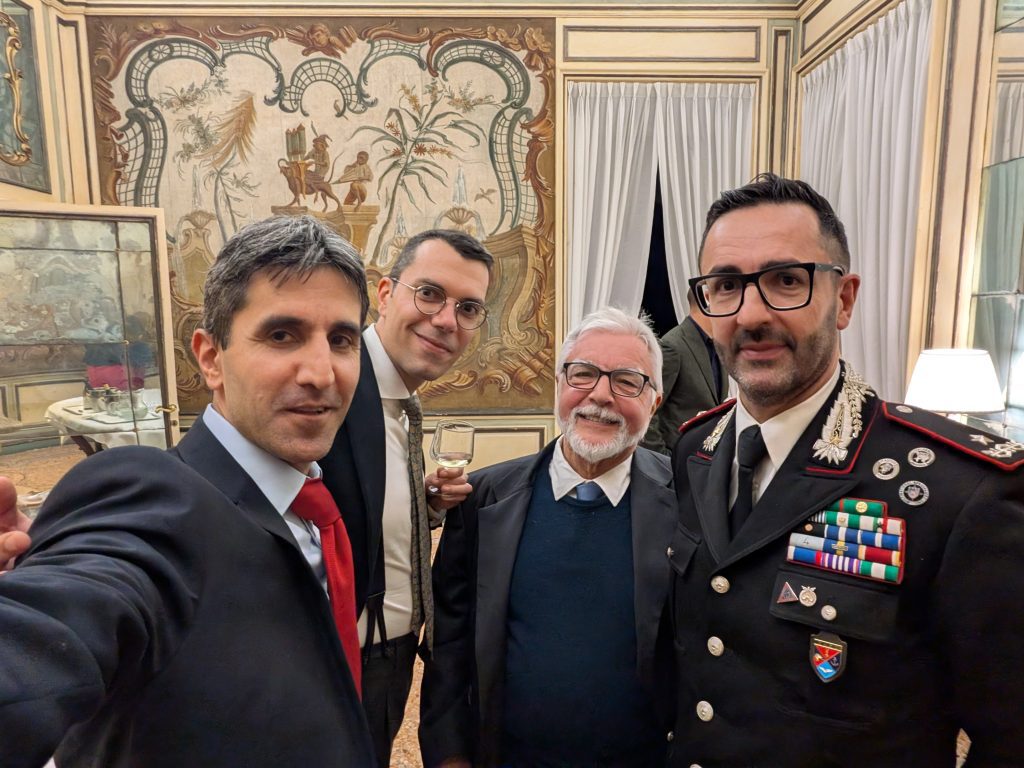
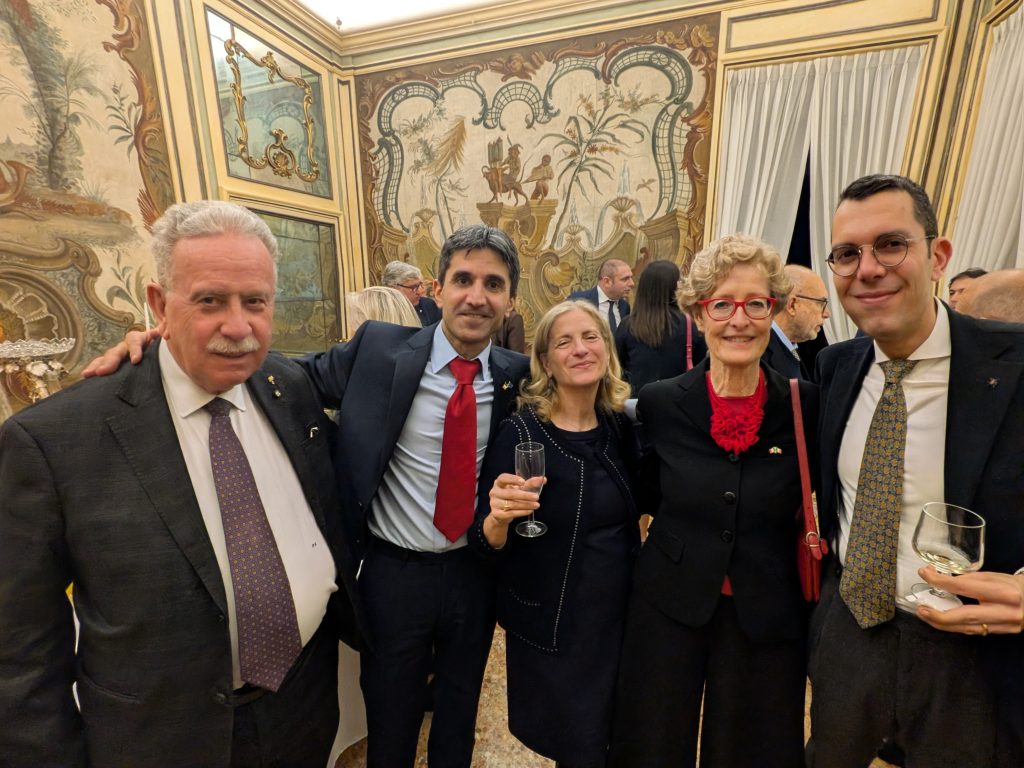
On Monday, 23 February 2026, Dectar had the pleasure of taking part in a high-value evening at Villa Spada (Embassy of Ireland in Italy), Rome: a business networking aperitivo followed by a panel discussion on “Artificial Intelligence as a tool for economic growth: opportunities, limits and ethics.”
Representing Dectar were our team — including Stefan Umit Uygur, CEO, and prof. Gianfranco D’Atri — together with prof. Antonio Ballarin, member of Dectar’s Scientific Committee and Visiting Professor at the University of Canada West, who contributed a practical perspective on how AI can become a real enabler of growth—without losing sight of responsibility and impact.
A timely conversation, in the right setting
When AI is discussed, it’s easy to stop at the slogans: “automation,” “productivity,” “new opportunities.” In reality, the most important questions are different: which benefits are truly measurable? Which limits must we acknowledge and manage? Which ethical choices become unavoidable when technology enters decision-making processes?
The panel put exactly these issues at the center—clear, direct, and focused on the “how” (not just the “what might happen”), with an approach that is genuinely useful for anyone tackling innovation challenges inside an organization.
High-quality networking: vision, expertise, cybersecurity
One of the highlights of the evening was the networking. Not just exchanging business cards, but the chance to connect with people who combine strong expertise, including in cybersecurity, with a pragmatic vision of how to bring AI into organizations in a sustainable way.
In this, IBNI (Irish Business Network Italy) really makes a difference: it’s the kind of community that creates the right connections between professionals and companies with strong ties between Italy and Ireland, turning conversations into collaboration, projects, and shared growth.
Four takeaways we’re bringing home
From the discussion in Rome, three ideas stood out—more valuable than many slide decks:
- AI accelerates—but it doesn’t replace strategy
Results come when technology is embedded in clear goals, redesigned processes, and concrete metrics. Without governance, AI risks becoming an expensive experiment. - Digital sovereignty: where does Europe stand in emerging industries? As Stefan Umit highlighted, the rise of AI and cybersecurity raises a strategic question: what role does Europe want—and can it realistically play in these critical sectors, balancing competitiveness, technological autonomy, and long-term industrial capacity.
- Ethics and compliance aren’t “nice-to-haves.”
Transparency, accountability, bias, traceability: these become operational topics immediately, especially when AI touches people, data, and decisions. - Security: AI expands the risk surface
More automation and more data also mean more exposure points. Cybersecurity can’t come afterward: it must be part of the project from day one.
Dectar’s perspective: innovation with responsibility
At Dectar, we work every day to help organizations grow through reliable technologies and a strong protection-first mindset. That’s why we believe AI adoption must always be supported by governance, security, and awareness.
A sincere thank you
Our heartfelt thanks to H.E. Elizabeth McCullough, Ambassador of Ireland to Italy, and to the partners who made the evening possible.
And a special thank you to Orla Ralph, President of IBNI, and to Enterprise Ireland Italy, for the warm welcome and for helping create an environment where meaningful conversations happen naturally.
If you’d like to continue the conversation on AI, ethics and cybersecurity, get in touch: for us, these dialogues are one of the most concrete ways to turn innovation into real-world impact.